Bosnia and Hercegovina
We left Split, Croatia in the morning and took the scenic road south along the Adriatic to Openiz. There were a couple of very pretty towns sitting on the hills or jutting out into the sea, a classic Croatian picture indeed. Omis, about 30 minutes outside of Split, was especially lovely.
It took us 3 hours to drive to Mostar in Bosnia. There was no problem crossing the border into Bosnia.
Mostar is famous for its Stari Most, an arched stone bridge over the Neretva River. Construction was initiated in 1557 by Suleyman the Magnificent of the Ottoman Empire. Completed in 1566, it became recognized as one of the world’s major engineering accomplishments and stood for over 400 years surviving WWII only to be destroyed by in 1993 by the Bosnian Croat artillery in their war with the Bosniaks. The reconstructed bridge was completed in 2004 and is a UNESCO site. The town, although a bit touristy, is picturesque with narrow meandering streets along the hills.
We followed the river toward Sarajevo. On each side were beautiful tall mountains, steeper than those we had seen in Croatia. Another noticeable difference from Croatia was that every town had a mosque. Less English was spoken here, and signs were in Cyrillic as well as English. Using the GPS and downloading directions on Google maps got us to our hotel, Old Town Hotel, with absolutely no problem. We got to the hotel in early evening around 6:30 pm so had spent a good part of the day driving. We had a very nice, large room in the old town, just two blocks from the main mosque and a block from the river and the site where the Archduke Franz Ferdinand of Austria and his wife, Sophia, were assassinated in 1914 sparking World War I.

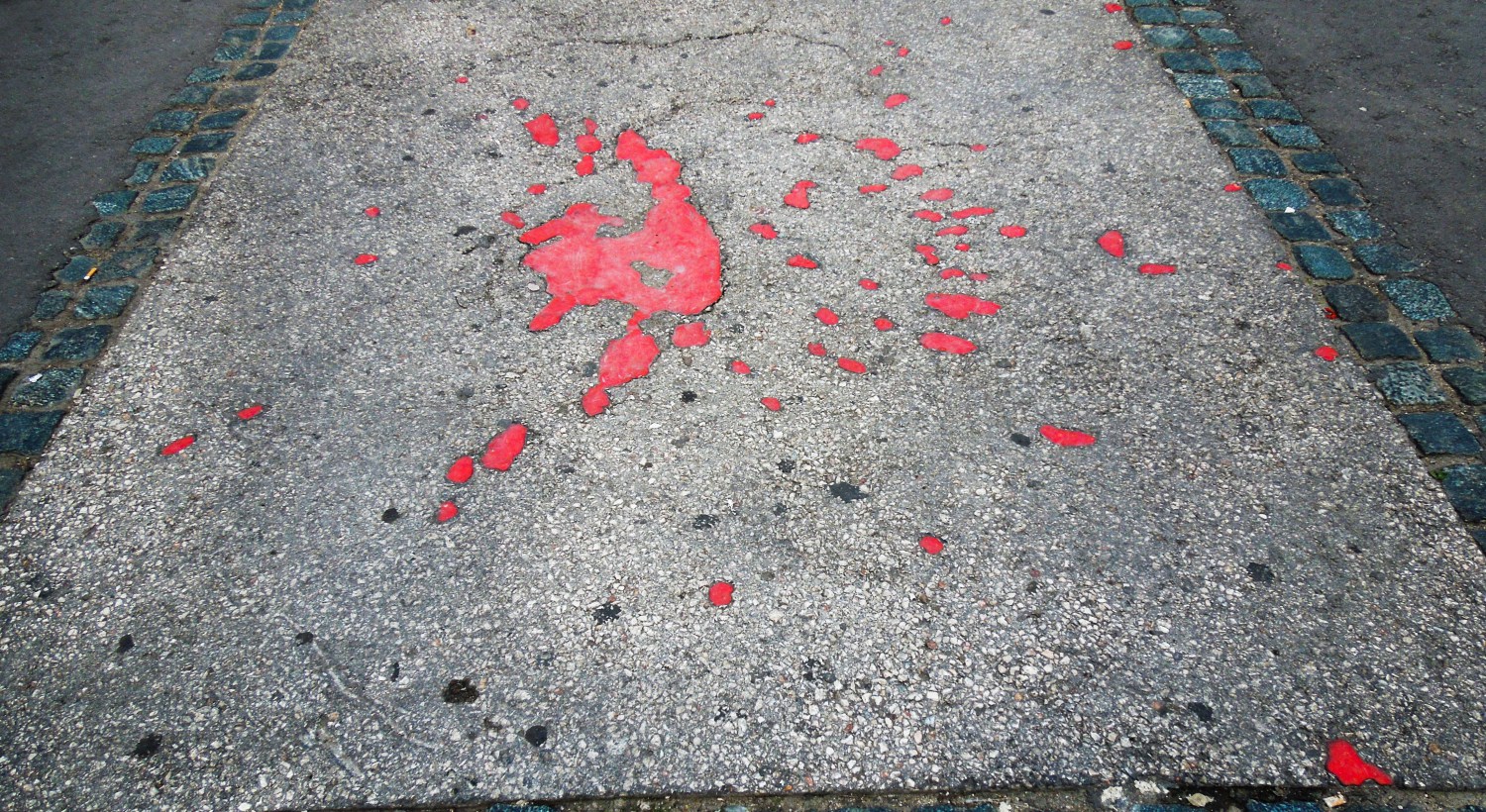
I looked out our window at the building across the street and saw unusual indentations in the wall. Instinctively I knew they were bullet holes, but it was hard to believe that 20 years after the cease fire, the wall had not been plastered over. I was correct, they were bullet holes and only the first of many we would see in Sarajevo.
We had dinner at Pod Lipom based on a recommendation from our hotel. The waiter said that Bill Clinton had eaten there around 2002 or 2003. A dish of local selections of grilled meats and Greek salad was 25 BAM (Bosnian convertible mark) or USD 15.
The next morning after our breakfast buffet, which was included with our room, we walked to the information kiosk to find out that there was a tour of the Tunnel of Hope leaving immediately. We joined the tour (there were only 3 of us) and drove out of the city past the airport where The Tunnel was excavated under the airport to allow food and supplies to be brought into the city. The Tunnel of Hope Museum in the village of Donji Kotorac serves as a reminder of the siege of Sarajevo from 1992-1995. The tunnel is 1 meter wide and 1.5 meter high and 800 meters long. It was built in 4 months using only hand tools and served as the only reliable means for receiving food, water, gas, and ammunition. There was a hand railway installed to make it easier to transport goods. The tunnel was really pivotal for Sarajevo. The stats in the museum showed that the Serbian army had 3 times the resources of Sarajevo at the beginning of the siege. The Tunnel was also an escape route for those residents who could secure the necessary documentation and connections to leave. Our guide said his aunt and uncle escaped Sarajevo through the tunnel, and it took approximately a year to arrange all the political connections. The museum included an interesting documentary movie of the building of the tunnel and bombing of the city. It should be a “must see” if you go to Sarajevo.
Sarajevo was founded in the early 1500’s by the Ottoman Empire and today the Turkish quarter with pedestrian lanes, jewelry shops, copper workshops, clock tower, numerous cafes, and mosques reflects this influence. The Austro-Hungarians arrived much later in the late 1800s and established Ferhadija Street as the main thoroughfare, so there is an interesting architectural contrast and a real demarcation where east meets west. In the late afternoon, we joined a free tour which covered the Austro-Hungarian part of the city. The guide was a young law student born here during the siege. We stopped at several of the historic buildings including the old Sephardic synagogue which dates from 1581 and is now a Jewish museum. In the early 1500s when Jews were expelled from Spain, the Sultan in Sarajevo offered them a place to live, and there was a large Jewish population until World War II.
We went into the Catholic Cathedral which was intended to be built to equal Norte Dame in Paris but was modified as it was believed there were too many poor who would not identify with such an elaborate church. There is a statue of Pope John Paul II in front of the church to commemorate his visit after the war to demonstrate that Sarajevo was a safe place to visit. The Orthodox Cathedral, which had just finished its restoration a month before we arrived, is beautiful.
Excerpt from my article, Mountains, a monastery, and reminder of war – a self-drive tour of the Balkan countries, published in the September 2015 issue of International Travel News.