Cruising the Dalmatian Coast of Croatia
We arrived in Dubrovnik and found the Pile Gate, the main entrance into the Old Town. We parked our car in a public lot just outside the gate, and walked to our hotel, Celenga Apartments. Our apartment on four floors included a full kitchen, dining room, living room, laundry, and 4 bedrooms. It was fantastic. Located on the corner near the Marin Drzic House, a couple of blocks off of the main street, we felt like we were living in Dubrovnik instead of visiting. We walked to the local market every morning, buying fresh burek (round pastry of filo dough filled with cheese, meat or vegetables) for breakfast.
Dubrovnik deserves its title, “the jewel of the Adriatic’. Each medieval city we visited was unique and deserved the time we spent in it, but Dubrovnik sets a standard that is hard to equal. If you only have one stop in Croatia, Dubrovnik has to be it. The Placa or Stradum is the main street in Dubrovnik. Entering from the impressive Pile gate on the western side of the city, you pass the Onofrio fountain before entering the 300-meter-long Stradum to the main square.
Dinner inside of the city walls was more expensive than we had paid in previous towns (dinner at Pizzeria Bona Fide was 238 KHR). Dubrovnik, like many of European cities, has numerous concerts in the evenings during the summer. We attended one at the Domino church featuring the Dubrovnik Chamber Trio consisting of a flute, bassoon, and piano.
The next morning, we went to the open market which mainly was selling local sweets of orange peel, lemon peel, and almonds, which were all delicious. We took the 12:00 noon town walking tour. As always, it is a great way to learn about the history of key buildings and return later on your own. Dubrovnik has been inhabited since the 4th century, but most documentation comes from the 7th century. A lot of walls and buildings were built in the 13th century, but as there seems to be a major earthquake every 100 years, the city was constantly being rebuilt. As the surrounding countryside had no resources, the town built up its shipping industry and became the port where those inland brought their goods to be traded and shipped along the Adriatic coast.
After the tour, we went to the old synagogue. There has been a Jewish community here since the 1500s when the Jews were expelled from Spain. The museum has two very old Torahs from the 13th and 17th centuries. The synagogue is very small and is the second oldest after Prague.
We then went to the Rector’s Palace. We bought the one-day pass for 150KHR for 24 hours. It included access to the city wall which is 100 KHR and the Rector’s Palace which normally would have been 80 KHR, so was worth it. Our guide had told us that the palace had several renovations so there several styles throughout - Gothic, Venetian, and Baroque.
The Gothic style Cathedral is large, but not too impressive. Our guide pointed out that there are 50 churches in the old town, and this is because each noble family built their own chapel primarily as a burial mausoleum. We walked up the steps to another church, St Ignatius of Loyola and then wandered the streets until we got to the Marin Drzic museum which is right across the street from us. He was a playwright who lived here in the 1500’s.
We had dinner at Kavana Dubrakva which is located just outside the city wall by the Pile Gate. It’s an absolutely beautiful setting overlooking the water and city walls. I had the seafood risotto and my husband one of their lamb specialties. Dinner, including a bottle of wine, was 300 KHR. I highly recommend this restaurant and reservations are a must if you want to sit by the water.
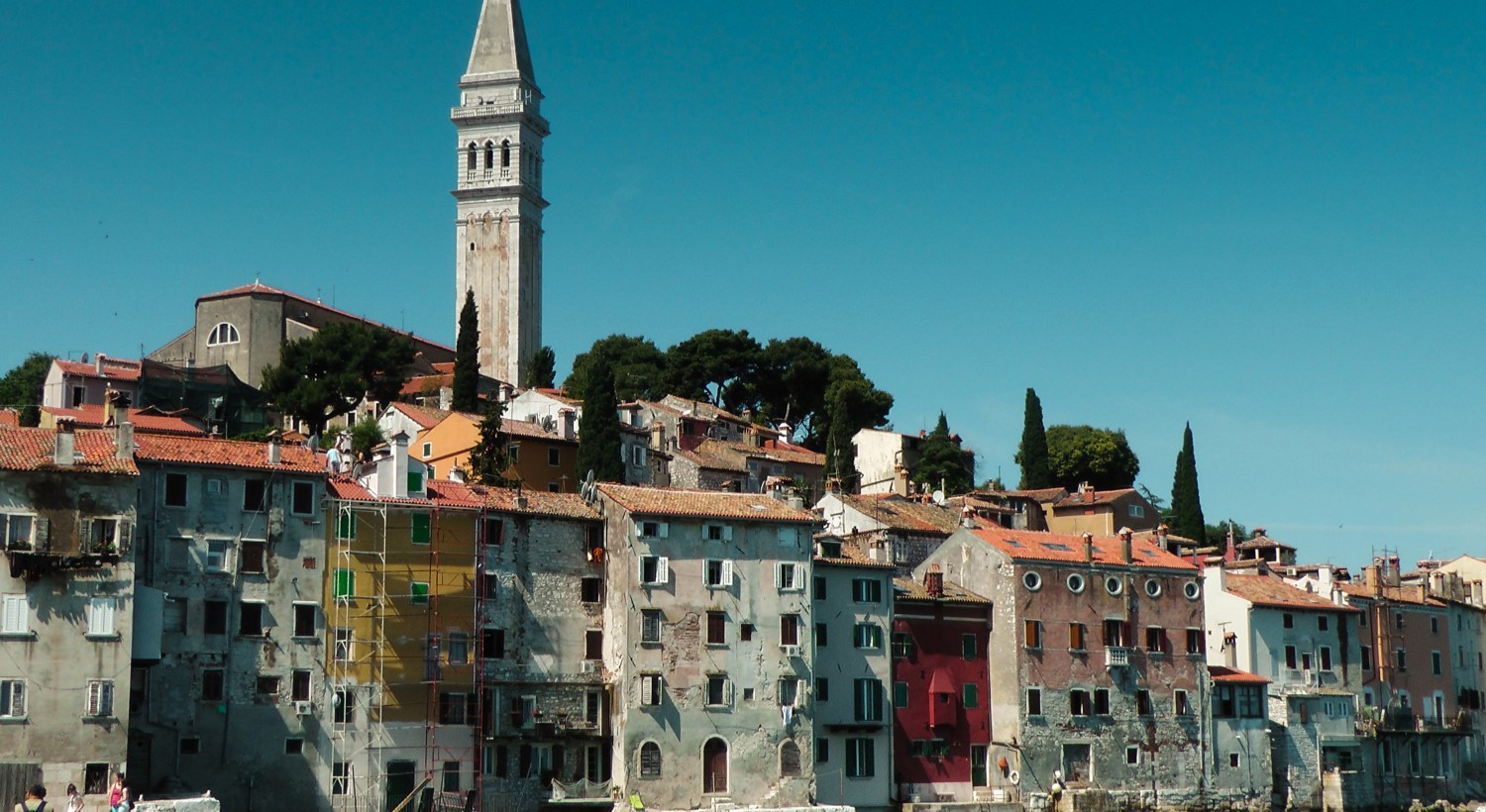
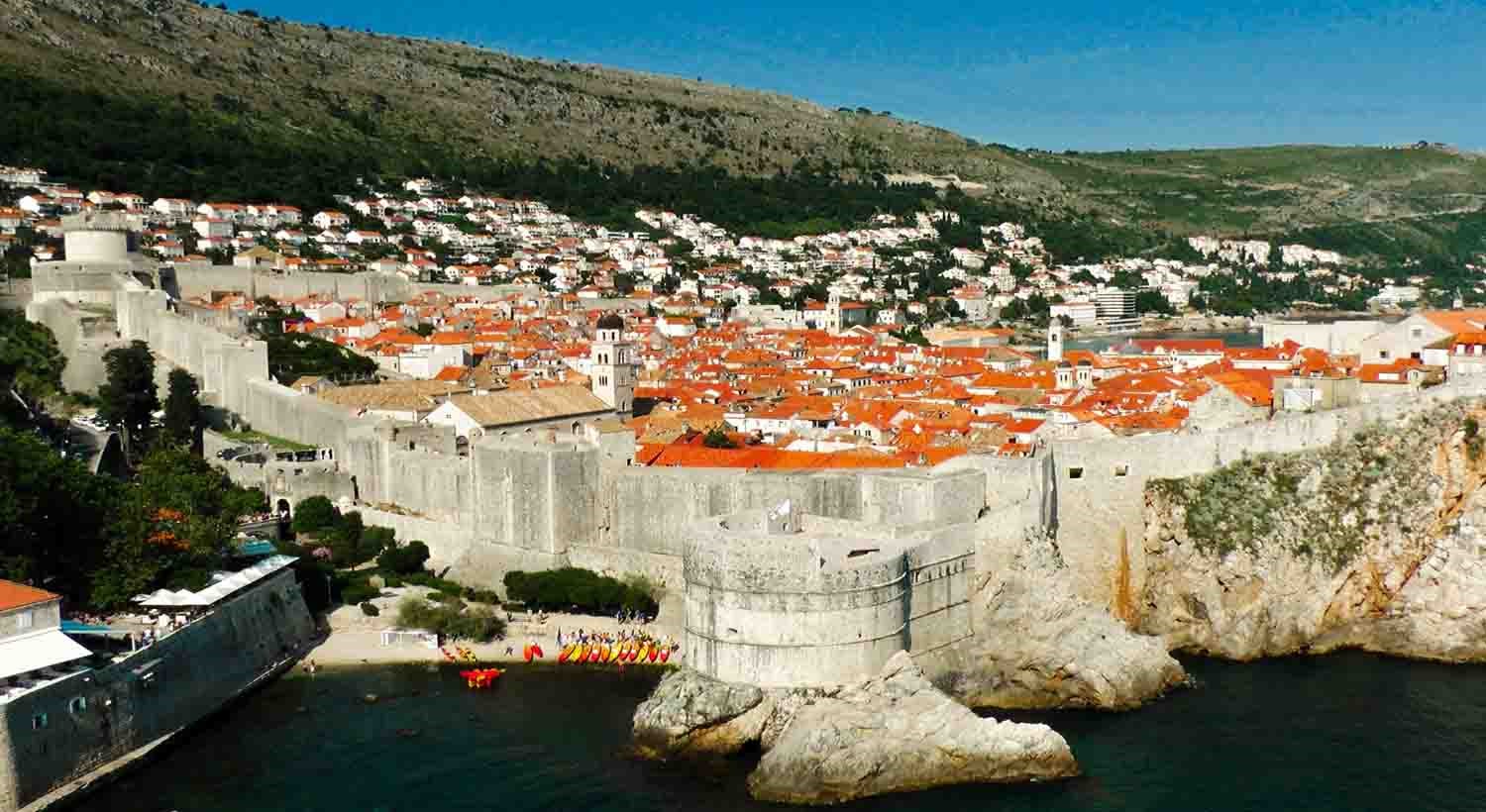
The next morning, we walked the wall which goes around the entire city. We took 2 hours to do the 2000-meter loop. It was very hot! From the wall you saw how many roofs were destroyed during the Homeland War in 1991 - the new roofs are a bright red tile, while the original roof tiles are a reddish-brown color.
In the afternoon we went to a couple of churches, we had not visited the previous day. The Serbian Orthodox church is relatively plain. St Blaise church is in the Baroque style and was definitely the most impressive church in the city. Not too surprising as St Blaise is the patron saint of Dubrovnik.
We stopped by the Orlando’s Column located near St Blaise. The Column was built for the visit of the king of the Austro-Hungarian Empire. Over the years Orlando became the standard measure, 20 inches, for cloth.
We visited the Franciscan Monastery. The cloister dates from the 14th century. The small pharmacy has been in continuous operation since 1317. In the pharmacy, there was a pharmacopeia from the 1500s.
Along the Stradum we saw signs for the War Photo Limited Exhibition which claims to be the only gallery in the world devoted to war photos. We went in, and while it was extremely sobering, it was well done and worth the visit. There were many photos of the Syrian war. On the second floor is a permanent exhibit devoted to the wars in Yugoslavia curated by New Zealand photojournalist Wade Goddard, who worked in the Balkans in the 1990s. There are good descriptions of the various wars and separation of Croatia, Bosnia and Hercegovina, and Kosovo.
We then went outside the Pile Gate and walked up to the Fort. There are many steps, but it was in the shade so not a bad climb. The views of Dubrovnik from the fort walls are wonderful.
Our last night in Dubrovnik we had dinner at Konoba Penatur next to St Basil’s church for KHR 300.
Excerpt from my article, A self-drive tour of Croatia plus a cruise along the Dalmatian Coast, published in the August, 2015 issue of International Travel News.